


In this episode, Glen and Kevin are joined by Luke Dalton, a former Royal Marines Commando, now co-founder of Contact Coffee and an SEO specialist.
Luke’s story isn’t a polished “career pivot”. It’s a long, overlapping transition from military service into business, where discipline, resilience, and execution mattered far more than frameworks or theory.
The conversation moves between brand-building, SEO, and life after the forces but the common thread is practical decision-making under pressure.
From the Royal Marines to starting a brand
Luke began Contact Coffee while still serving. The idea came from a simple gap in the market: while deployed, he discovered US-based military coffee brands but couldn’t find a UK equivalent that resonated with the same audience.
Rather than overthinking it, he started small. There was no formal business plan, no funding round, and no launch strategy. The brand evolved in public. The packaging changed, messaging improved, and the audience grew alongside it.
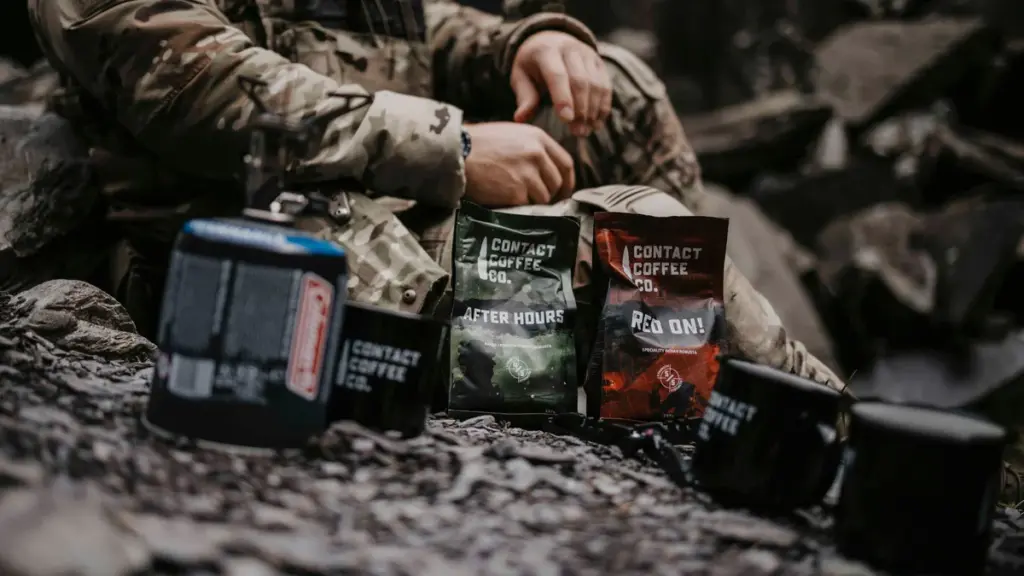
This slow, visible build created something many brands struggle to achieve: early customers who stayed invested in the journey.
The identity shift after leaving the forces
One of the more candid parts of the discussion focused on what happens after leaving the military, particularly the delayed identity shift that can surface years later.
“You don’t always feel it straight away. It can hit much later.”
Moving from high-stakes, highly structured environments into civilian work creates a psychological gap that isn’t always obvious at first. Marketing problems can feel trivial by comparison, but that doesn’t make the transition easier.
This isn’t unique to veterans. Founders and senior operators often experience similar friction when their roles or environments change.
Execution beats strategy under pressure
Luke’s military background heavily shaped how he thinks about marketing and SEO. Planning matters, but plans are only useful if they can be executed when conditions aren’t ideal.
In the forces, execution happens regardless of uncertainty. In marketing, work often stalls once ownership becomes unclear or conditions change.
This contrast explains why many SEO roadmaps look strong on paper but fail in practice.
Social reach vs commercial reality
Contact Coffee initially grew through social media, particularly Instagram. Over time, Luke noticed a familiar pattern: more reach didn’t necessarily translate into more revenue.
Posting regularly became a full-time effort with diminishing returns. Email, on the other hand, consistently drove higher intent and repeat purchases.
As a result, the brand reduced posting frequency and focused more on owned channels. This is a shift many eCommerce brands quietly make once social becomes harder to sustain.
Micro-influencers and alignment over scale
Influencer marketing is another area where expectations often don’t match reality.
Instead of paying for large creators, Contact Coffee sent product to smaller, niche influencers aligned with the brand’s audience, many with relatively modest followings.
The result was more authentic content, stronger trust, and ongoing advocacy rather than one-off spikes.
It reinforced a recurring theme in the episode: alignment tends to outperform scale.
SEO expectations from both sides of the table
Luke now works in SEO as well as running a brand, which gives him visibility into both sides of the relationship.
A common issue he sees is SEO being treated like a short-term performance channel. Businesses expect immediate returns, while structural issues with the website or product are ignored.
In some cases, SEO simply isn’t the right priority yet and saying that early is often more valuable than taking on work that’s likely to fail.
Outranking big brands with simple execution
Luke also shared a side project where a small site outranks major coffee brands for specific queries.
There’s no complex tooling or advanced tactics involved. The site focuses on clear answers, clean structure, and basic schema.
It’s a useful reminder that search visibility is often earned through clarity rather than complexity.
Why side projects still matter for SEOs
The episode closes on the importance of side projects. Without them, it’s hard to test ideas, break things safely, or understand how search really behaves.
Client work rarely allows that level of experimentation.
For Luke, side projects aren’t optional. They’re how real learning happens.
Where to find Luke Dalton
You can learn more about Luke and his work here:
If you found this episode useful, follow Beyond SEO for more conversations that focus on execution, not surface-level tactics.
Work with Growthack
Growthack works with B2B, eCommerce, and SaaS brands that need senior SEO support, not generic agency delivery.
- Technical SEO and complex website migrations
- Search-led information architecture and content strategy
- Data and tracking integrity for decision-making
- Commercial alignment between search, marketing, and revenue
The team only takes on a small number of new clients each year and looks for a genuine fit on both sides.
If you’re a CMO or marketing leader and want to explore what a specialist SEO partnership could look like, you can get in touch via the website.

